
Condition data bound to the batch
Temperature, atmosphere and moisture, captured continuously from cold store to shelf and bound to their batch — so a quality claim is something you can show, and an excursion something you catch in time.
Readings arrive too late to act on
Most chains are already instrumented: loggers in the trailer, sensors in the store, a file from the reefer. The information exists — it just arrives too late, detached from its batch, and unread until someone argues about who pays.
How it usually goes
- The logger is read out on arrival, hours after the excursion it recorded
- A CSV per trip, in a folder, unlinked to any batch or delivery note
- Shelf-life decisions made on the calendar rather than on what the product actually experienced
- A rejected load, and two parties with two versions of the same trip
With Quality Insights
- An excursion raises an alert while the load is still in transit
- Every reading is bound to a batch, a location and a responsible party
- Remaining shelf life follows the thermal history, not the printed date
- One record of the trip that both parties agreed to in advance
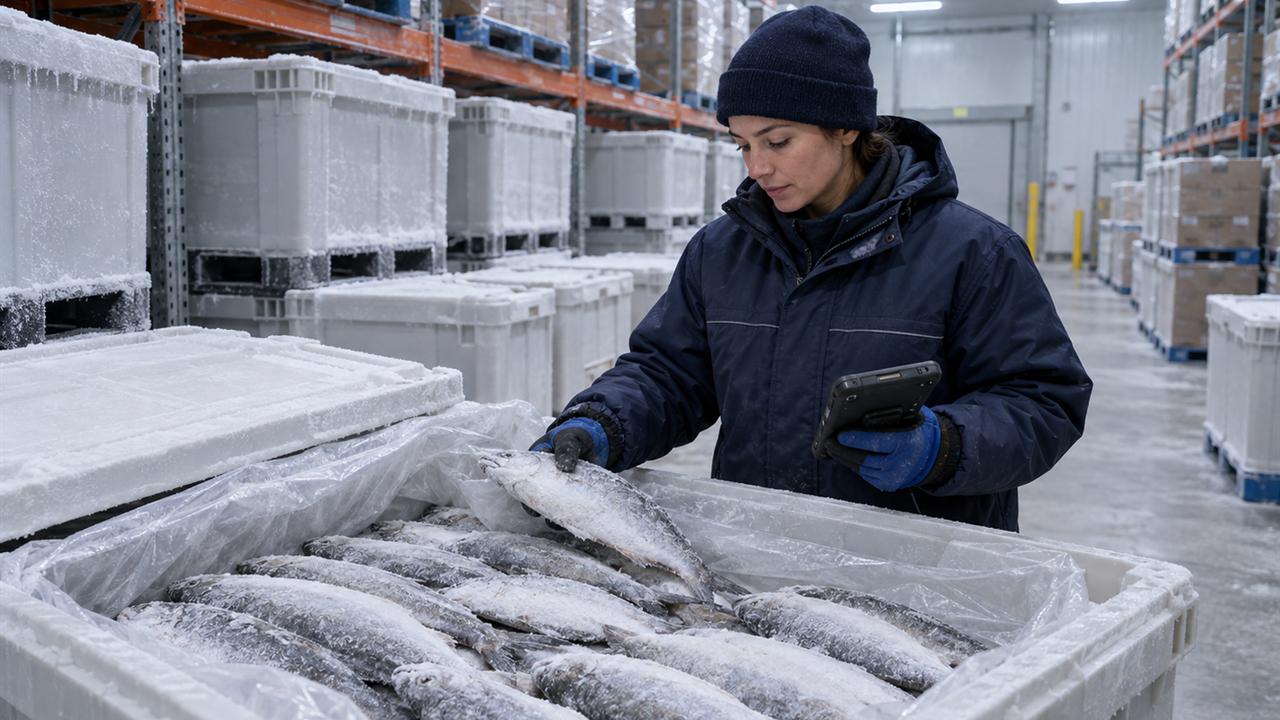
Catch excursions while you can still act
A continuous trace beats an average. A load can hold a perfect mean and still spend forty minutes at 8 °C on a cross-dock — the event that decides what reaches the shelf, and exactly what an average hides.
We hold the whole curve, flag breaches against the range you agreed, and attribute each to the leg and party it happened on. Mean kinetic temperature sits alongside it, for cumulative load as well as single events.
Atmosphere and moisture in long-term storage
In a controlled-atmosphere store, CO₂ and O₂ sit in a narrow band for months. A slow drift costs more than a brief spike: it surfaces as internal browning at the end of the season, too late to act.
Moisture cuts both ways: too dry loses saleable weight, too wet stores a mould risk. For grain and pulses it decides whether a lot is safe to store at all — and it is the number a buyer re-measures on arrival.
- CO₂ and O₂ held against a per-variety storage regime, with drift detected before it becomes damage
- Moisture content and water activity against safe-storage thresholds for the commodity
- Weight loss through the storage season tracked as shrink, not discovered at outload
- Every reading exportable as a signed record for the buyer, the insurer or the auditor
| Store | Product | Temp | CO₂ | Moisture | State |
|---|---|---|---|---|---|
| CA 1 | Conference | -0.5 | 1.8% | 93% | In spec |
| CA 3 | Elstar | 1.0 | 2.4% | 92% | In spec |
| CA 4 | Jonagold | 1.1 | 3.4% | 91% | CO₂ drift |
| Silo 2 | Milling wheat | 12.0 | — | 14.8% | Above 14.5% |
| Silo 5 | Feed barley | 11.4 | — | 13.6% | In spec |
From sensor reading to something you can stand behind
Ingest what is already there
Reefer telematics, USB and BLE loggers, store controllers, handheld probes and lab results — read in their own formats rather than replaced.
Bind readings to batches
A reading with no batch is telemetry. A reading tied to a lot, a location and a responsible party is evidence. We do the binding at ingest, not afterwards.
Alert while it still matters
Thresholds per product and per leg, with escalation to a named owner. An alert that arrives after unloading is a report; one that arrives during transit is a decision.
Turn history into shelf life
Remaining shelf life modelled from the thermal history a batch actually experienced, so first-expiring-first-out reflects condition rather than a printed date.
Settle disputes with a shared record
One trace both parties subscribed to before the trip, with the excursion attributed to a leg. Claims get shorter when there is nothing left to reconstruct.
What it changes
Fewer losses you find out about too late
Excursions are caught during the leg they happen on, when rerouting, re-icing or re-grading is still an option.
Shorter, cheaper claims
A shared record agreed in advance removes the reconstruction phase, which is where most of the cost and most of the ill-will in a claim sits.
Quality claims you can evidence
"Unbroken cold chain" stops being a statement of intent and becomes an exportable record with a party's name on it.
Start with one trip that went wrong
The fastest way to see whether this is worth anything to you is to take a consignment you argued about and ask what we would have shown you, and when.