DataLab
Connects data from across the poultry chain, so a change can be examined for what it means for performance, animal welfare and emissions.

Digital Vital Poultry Chain is co-funded by the European Union.
Digital Vital Poultry Chain is being developed under the working names ‘Vitale keten kip keten’ and ‘Digitale Keten Kip’.
The DataLab is what the other two stand on.
Connects data from across the poultry chain, so a change can be examined for what it means for performance, animal welfare and emissions.
Records substantiated emission reductions in a recognisable form and brings them to interested parties.
Make practical data and live research questions usable for education, skills development and knowledge exchange.
The DataLab brings information from the links in the poultry chain together, so users can investigate how conditions, interventions and results relate.
Conceptual view of the chain. Actual data availability differs per link in the chain and per research question.
A shared data basis carries the dashboards, the analysis and a digital twin — a model of the real chain fed with data from practice. It lets researchers and companies ask sharper questions.
Within Digital Vital Poultry Chain the marketplace for CO₂ and NH₃ credits is in use. It connects parties that reduce emissions with parties that value substantiated reductions, resting on reliable data and a verifiable basis.
A reduction is described, assessed and recorded before it enters the marketplace. It has to be clear which activity caused the reduction, over what period it was established, and which assessment method was used.
CO₂ and NH₃ each have their own approach: substantiation, units and conditions are set per category. That includes how reductions are checked and recorded, and how a double claim is prevented.
The EduLab connects education and applied research with the questions companies have. With HAS University of Applied Sciences (HAS green academy) we are building a learning environment where students and professionals learn to interpret data and set up research.
That might mean comparing production rounds, assessing welfare indicators, or investigating the effects of an intervention. It creates an exchange: companies bring in questions from practice, and education and research help answer them systematically.
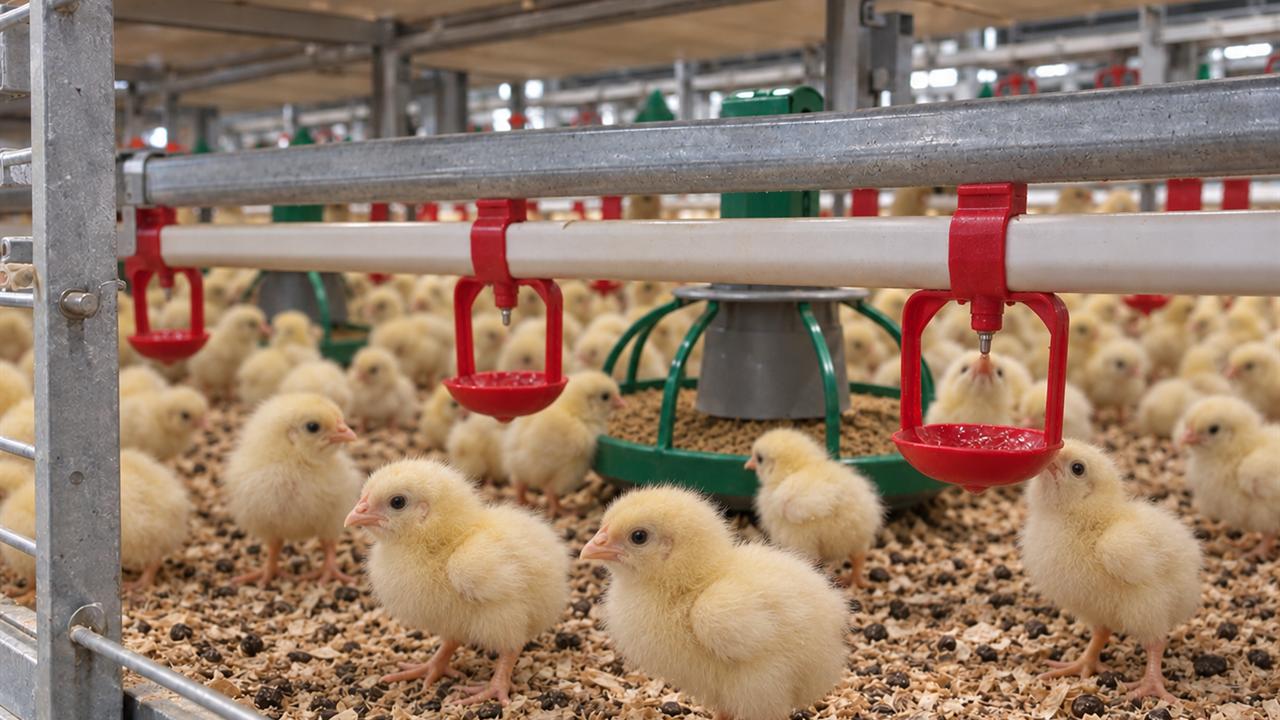
HAS already describes research at Kuijpers Kip into the welfare and health of broiler chickens, connecting sensor data to observations and management results — the link between data, education and practice that the EduLab builds on.
Our ambition is to develop Kuijpers Kip Research Field, together with Digital Poultry Chain and the cooperation of HAS University of Applied Sciences, into one of the most advanced validation centres for European poultry research.
Kuijpers Kip Research Field connects a physical poultry environment with a digital twin, so observations from practice, model outcomes and research results sit side by side.
For suppliers and researchers it is a place to test an intervention: what does a change do to the animals, the production process and the environmental impact?
Develops the digital data provision and dashboards, and connects data to applications for the chain.
Connects the project to poultry practice and provides the environment for research and testing.
Contributes from education and applied research, with a recognisable role for students and researchers.
Three connected facilities: a DataLab that makes chain data usable, a marketplace for CO₂ and NH₃ credits, and an EduLab that builds knowledge and skills. The first two are in use; the rest is still being developed.
Connected records that support research and decisions, and can be followed back to their source. In use.
A way to record and assess reductions within the marketplace. In use.
Practical questions, data and research brought together for education. In development.
A stronger link between innovation, validation and application in the poultry sector. In development.
Digital Vital Poultry Chain is co-funded by the European Union. The emblem and the full funding statement are at the top of this page.
Digital Vital Poultry Chain, developed under the working names ‘Vitale keten kip keten’ and ‘Digitale Keten Kip’.
The official project title, scheme and period will be added here once the link to the grant decision has been established.
Kuijpers Kip Research Field is the research programme of Kuijpers Kip B.V., where practice and research work together.
Do you want to discuss a research question, make better use of data from practice, or contribute to the DataLab, the marketplace or the EduLab? Get in touch with FoodInsights.